THE UNMUTUAL PRISONER ARTICLE ARCHIVE
THE PROJECTION ROOM (The Prisoner Compared...)
THE WHOLE EARTH AS THE VILLAGE:
Pluribus Reimagines The Prisoner For The Post-Pandemic 21 st Century
By Tom Mayer
It's always a pleasure to discover a new television series that has tapped into the spirit of The Prisoner . The theme of the individual versus society that forms the program's narrative is a perennial subject going back to its antecedents 1984 and Brave New World . Since the turn of the millennium, several films and television programs have analyzed the nature of individuality or the struggle against oppression, sometimes within a mind-altering setting. These include everything from The Matrix and Lost to The Leftovers, Wayward Pines and Severance .
The most recent foray into this subject has been Pluribus created by Vince Gilligan and his production team who gave us the excellent Breaking Bad (2008-13) and its equally brilliant prequel/spinoff Better Call Saul (2015-22). Due to the success of these shows, Gilligan had enough clout to do whatever he wanted next (similar to the notoriety Patrick McGoohan had achieved by 1966 when he pitched The Prisoner to ITC). Expectations were so high for Gilligan's new series that a bidding war ensued among streaming platforms to see who would have the honor of screening it. Apple TV eventually secured the rights for a nine-episode season.
After three years of secrecy (and several cryptic teasers in the months leading up to its premiere), Pluribus finally arrived in November 2025. It was an immediate success, earning a nearly perfect online rating among critics and being the subject of much discussion and analysis among viewers. Comparisons with The Prisoner were immediate as well. Viewers mentioned the older series on social media platforms and podcasts, while over the next few months, several YouTube comparison videos also appeared. Evidentially, No.6's experience in The Village decades ago made such an impact that astute TV viewers today were quick to point it out while discussing Pluribus .
This wasn't a complete surprise since the show's creators are on record as being Prisoner fans. A fifth season episode of Better Call Saul ("Dedicado A Max") began with the character of Mike Ehrmantraut waking up in a remote Mexican village with no memory of how he got there. He immediately asks a woman, "Where am I?" and "Who brought me here?" Later, after unsuccessfully trying to place a call to the U.S., Mike is told by the woman, "Local calls only." Series co-creator Peter Gould later confirmed on a podcast that this scene was partially inspired by The Prisoner . Additionally, the 1968 film Ice Station Zebra (that McGoohan appeared in) had been namedropped several times on both programs, so it's not a stretch to assume that he and The Prisoner had been on the minds of the Saul/Bad team.
(Spoilers ahead for Season 1 of Pluribus.)
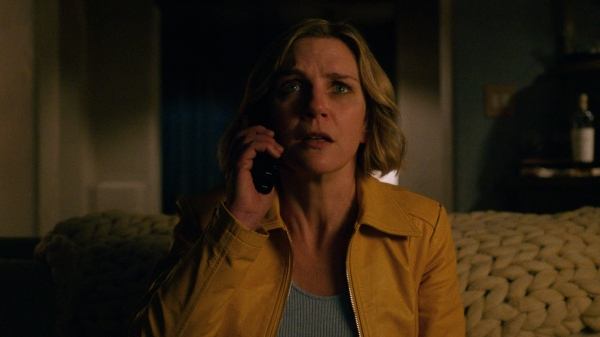
Pluribus centers on fantasy/romance author Carol Sturka (Rhea Seehorn) who, despite her success, lives in a chronic state of unhappiness. When an alien virus infects the world's population, Carol is one of only thirteen people who remain immune to its effects. Every other person on the planet becomes part of a single consciousness where all knowledge and memories are shared. Each member of this new collective now has the skills to do anything from flying a plane to performing a surgical operation. There is no longer any crime, while possessions and property are a thing of the past. Privacy and individuality have also disappeared. Although Carol can do anything or travel anywhere, everything she does is immediately observed and known.
Additionally, "The Others" (as Carol soon refers to them) live in a state of perpetual happiness. They claim that everything is perfect and beautiful since the world "joined" and they are eager to help in any way they can by providing food, information and assistance. Their sunny demeanor also masks an ominous purpose — they have plans to turn Carol into one of them. "We want to find out what makes you different," they tell her in the Pilot, "So you can join us!" Carol is understandably horrified by this admission and thus the main conflict of the series is set in motion.
Just as No.6 tried to escape The Village and learn the identity of No.1, Carol now has her goals: to try to find a cure for the infection and to prevent The Others from converting her. This puts No.6's original dilemma in perspective. He had only a small community to confront — Carol has the entire world to deal with. Frighteningly, Leo McKern's No.2's wish from "The Chimes Of Big Ben" has come true: the whole Earth is now The Village.
One would assume this premise is a narrative dead-end once the takeover occurs. Nine hours of Carol moping around her house would hardly make for engrossing television. Thankfully, Gilligan and his team keep the story moving. Once the set-up is established, Pluribus deftly subverts our expectations from the beginning. For example, one would expect The Others to be a marauding band of murderous zombies. Instead, they're disturbingly cheerful and always ready to help. Next, once Carol meets the remaining dozen people who are uninfected, the viewer would expect the group to immediately hit it off and form a team of freedom fighters. It doesn't happen — the remaining unaffected are happy with the new normal and want nothing to do with Carol. She's on her own.
Likewise, a viewer anticipating the explosive narrative sweep of Breaking Bad will be disappointed. Pluribus moves at a leisurely pace, daring to linger on character moments and long stretches without dialogue. The second episode contains an extended sequence of Carol struggling to dig a hole in her back yard to bury her spouse, Helen, who died during the joining. Carol's grief and frustration are evident. Another episode shows Carol unhappy that her favorite supermarket is now empty, so she calls The Others who obligingly appear to restock the entire building in an amazingly choreographed sequence. This low-key storytelling ends up being the show's strength. Instead of a barrage of stunts and explosions, we get solid drama and good character development. " Pluribus may be slow," Alison Herman of Variety noted, "but it [is] never boring."
This deliberate pace also creates an atmosphere of tension and unease. Who's playing who? How much does each "side" know about the other? How safe is Carol in this new world? The underlying creepiness is palpable to the point that The Collective's frequent greeting of "Hello, Carol!" becomes just as ominous as The Village's "Be Seeing You."
The small moments matter as well. At various times in the episode "The Gap," a clearly resigned Carol sings "It's The End Of The World As We Know It" (being a meta-commentary on the series so far), "Born To Be Wild" (while driving the empty highways), "I'm Alright" (while playing golf, a la Caddyshack ) and "Georgia On My Mind " (as she visits the deserted O'Keeffe Museum in Santa Fe). Each song's lyrics comment on (or ironically contrast with) what she is doing or feeling. Another scene features a depressed Carol watching an episode of The Golden Girls , with the raucous canned laughter of the '80s sitcom humorously clashing with the dour situation our heroine finds herself in.
Also of note are two other uninfected characters who exhibit vastly different reactions to the takeover. Mr. Diabate (Samba Schutte) from Africa fully embraces the new normal, reveling in the fact that he can have anything he wants, from personal flights on Air Force One to taking over an entire Las Vegas hotel. He even indulges in his own James Bond fantasy by having several Others role-play a gambling scenario similar to the one in Casino Royale .
At the other extreme is Manousos Oviedo (Carlos Manuel Vesga) of Paraguay who completely rejects all contact with The Collective by barricading himself in the office of his storage business. After receiving a communique from Carol that there are others uninfected, he embarks on a perilous journey to New Mexico to meet her.
The most intriguing character is Zosia, a woman from Morrocco chosen by The Others to befriend Carol due to her resemblance to a character from one of Carol's novels. Actress Karolina Wydra does a wonderful turn with the role by being the "face" of several billion people. The occasional pauses in her dialogue are perfect as we assume she is consulting with the rest of the Collective during her conversations with Carol. After losing Helen, Carol eventually admits to a growing attraction to Zosia which adds an interesting wrinkle to this already complicated scenario.
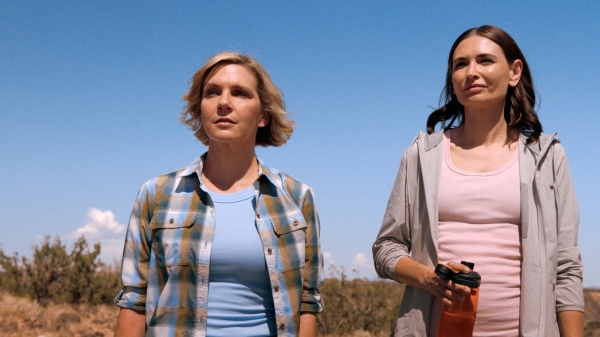
Visually, the show is a marvel. With a reported budget of $15 million per episode, the expense is evident. Besides New Mexico, other U.S. locations include downtown Las Vegas and snow-covered Montana, while several sequences were filmed in Spain as well. Like Breaking Bad and Better Call Saul , the show also takes place in Albuquerque, but the directors wisely photograph the city in a different style. The earlier programs filmed heavily in the heart of the city and its suburbs, but Pluribus instead focuses on the environs. Carol lives on the edge of the desert and we often see the city lights in the distance during night scenes. This not only gives the new show a different "look," but also emphasizes Carol's isolation from the rest of the world.
Interestingly, the cul-de-sac containing Carol's house was built specifically for the series. Since it's not a homeowner's private property (such as Walter White's house in Breaking Bad ), the producers are able to film just about anything they want from flying in drones and helicopters, to shooting off fireworks, to exploding a grenade, to even crashing a car though the fence in Carol's back yard.
With the producers steeped in popular culture of the past six decades, homages to and parallels with other creations abound. The initial reception of the outer space signal is straight of Contact (1997). Having characters linked psychically or through a controlling network contains shades of both The Matrix (1999) and Sense8 (2015). Carol's solitary visits to stores, restaurants and museums remind us of the isolated Overlook Hotel from The Shining (1980). Carol left alone in a deserted Albuquerque after a mass exodus by The Others not only recalls the empty Village of "Many Happy Returns" but also the desolate Los Angeles and New York of The Omega Man (1971) and I Am Legend (2007), respectively. Finally, Carol's disturbing discovery that the populace is now consuming a human-derived food source definitely recalls the infamous plot twist of Soylent Green (1973).
The premise of a protagonist having to cope with vastly changed surroundings and a new way of life recalls many classic television characters: Richard Kimble on the run attempting to clear his name in The Fugitive ; Sam Beckett (and later Ben Song) bouncing around through time trying to return to the present in Quantum Leap ; the castaways of Lost after their fateful plane crash on a mysterious island and, of course, No.6 trying to escape The Village in The Prisoner . Carol is now part of this select group as she too tries to adapt to a radically transformed world.
We don't learn much about her previous life (similar to Kimble, Beckett and No.6) but we are treated to a glimpse during the first twenty minutes or so of the Pilot. Before the Infection hits, Carol is returning home from a book-signing tour where we see that she's moody and sarcastic while dismissing her novels as "mindless crap." Her pessimistic outlook is established just enough to later be at odds with the happiness of The Others after the Joining.
As for The Prisoner , several lines of dialogue would be right at home in Pluribus :
From "Free For All" :
No.6: "Look at them. Brainwashed imbeciles. Can you laugh? Can you cry? Can you think?"
From "Checkmate" :
No.6: "You still have an independent mind. There are very few of us left."
And several from "Dance Of The Dead" :
No.240: "It's the rules. Of the people, by the people, for the people."
No.6: "Takes on a new meaning."
No.240: "You won't be helped?"
No.6: "Destroyed."
No.240: "You want to spoil things."
No.6: "I won't be a goldfish in a bowl."
No.2: "We can treat folly with kindness, knowing that soon his wild spirit will quieten and the foolishness will fall away to reveal a model citizen.”
No.6: “That day you will never see."
Likewise, Pluribus features some memorable lines that invoke The Prisoner . In the episode "Got Milk," Carol states the following in a video message to the twelve remaining uninfected citizens:
"Some of you think the world might be better off this way, with all the newfound peace, love and understanding. Enjoy that opinion. Relish it. Because it may be the last one you ever possess. And when the day comes that you have peace and love forced upon you, who knows, maybe in that last fleeting moment you might just realize you treasured your individuality."
To the other extreme, we hear the side of The Others in the episode "Please, Carol." Zosia responds to Carol's wish to want the world to return to the way it was:
"You want to change us too, don't you? Didn't you just ask if it's possible? There is something else to consider. We know what it feels like to be you. To be alone. To suffer. We've been you. But you've never been us."
The first season ends with Carol discovering that The Others are about a month away from matching the virus to her DNA, thus allowing them to convert her. She then arms herself (with help from Zosia) with an atomic bomb, and teams up with Manousos (newly arrived from Paraguay) to hopefully find a cure that will "save the world." At the time of this writing (early 2026), the word online is that we'll have to wait approximately two years for the next season. Hopefully, Vince Gilligan and his team can finish the next nine episodes long before that.
With several hundred scripted programs available to stream these days, it can be difficult choosing what to watch. Pluribus stands out from the pack. It is a very well-made show with high production values, excellent writing and wonderfully unpredictable storytelling. It reflects much of our past, while providing us with something entirely new. It's also a product of today's polarized, paranoid world of pandemics and insurrections. Once the encroaching anxiety and criticism of Artificial Intelligence is factored in, Carol's solitary conflict in a "with-us-or-against-us" scenario is timelier than ever. You can't ask for much more from a television series. Some sixty years after the premiere of The Prisoner , Patrick McGoohan would be proud to see his vision updated so successfully.
__________________________________________________
Click here to return to The Projection Room